No. Flexibility is essential. Problems arise only when it is not supported by documentation and clarity.

- Call Us :
- +91 8123841704
- Mail Us:
- info@srusticonstructions.in
- Address
- No 42/10, 1st main, KHB Colony, Yelahanka, Bengaluru


About Us
Srusti Constructions (a Brand of Mylar Enterprises an ISO certifications like ISO 9001, ISO 14001, and ISO 45001) is established to achieve success through immense care in planning and choosing the right resources and execution, be it the drawings, construction material and Vaastu to a clear title.
ConsultationContact Info
- No 42/10, 1st main, KHB Colony, Yelahanka, Bengaluru 560064
- +91 8123841704
- info@srusticonstructions.in
Building Beyond Challenges: A Kaizen Learning in Residential Construction
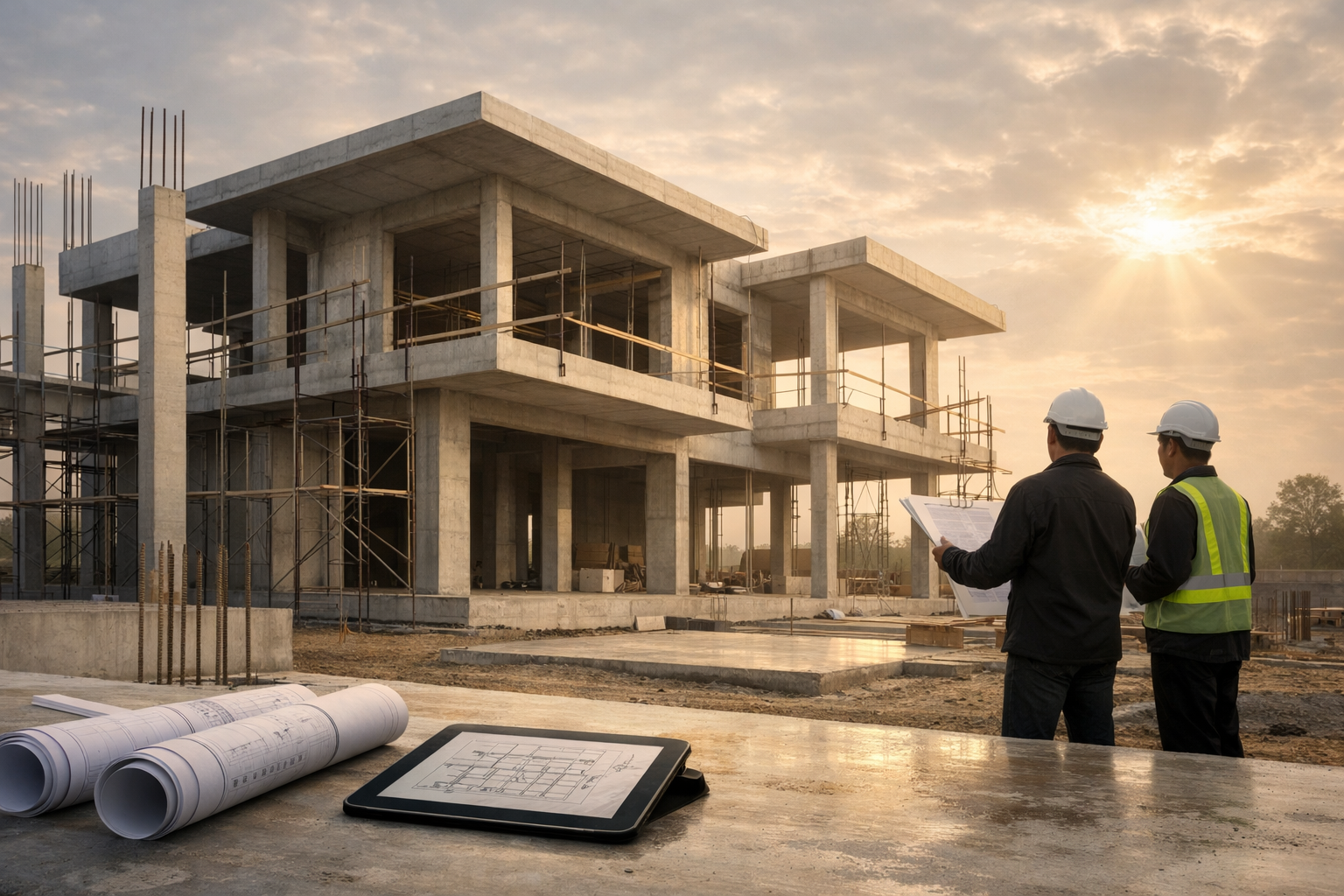
At Srusti Constructions, every project is more than brick and mortar. It is a responsibility—to honour trust, uphold process discipline, and live by our philosophy of “Quality with Transparency.”
Not every project moves forward without friction. Real-world construction involves people, expectations, timelines, and decisions that do not always align perfectly. When challenges arise, they test not only the client–contractor relationship but also the strength of internal systems. At Srusti, we do not treat these moments as failures. We treat them as Kaizen opportunities—chances to learn, refine, and emerge stronger.
This article shares learnings from one such residential project where expectations, scope, and execution intersected in complex ways. While the project details are anonymised, the lessons are real—and relevant to every homeowner planning a house.
The Situation
The project began under a standard base construction package of ₹1,800 per sq.ft, selected for its balance between affordability and structural quality.
To deliver maximum value, our team adopted a flexible and supportive approach during the early stages. Multiple design concepts were explored, virtual reality (VR) walkthroughs were shared, and detailed material discussions were conducted so the client could visualise the home clearly before execution.
As construction progressed, however, certain patterns began to emerge:
designs were reopened even after final approvals,
some scopes—such as interiors—were cancelled while expectations linked to those scopes continued,
stage-wise payments were delayed, slowing execution while accountability shifted back to the contractor,
quality concerns were raised despite documented triple-layer waterproofing and proactive quality checks,
and project documentation—agreements, QC reports, and daily updates—was frequently ignored, leading to misaligned expectations.
The Challenge
Construction is not only about concrete and steel. It is equally about expectation management.
In this project, minor site realities—such as plaster corrections or curing timelines—were amplified into larger concerns. Elevations that had been finalised months earlier and supported by VR models were repeatedly revisited. Even after interiors, nearly 18% of the project scope, were cancelled, there remained an expectation that premium-level benefits would continue.
At the same time, delayed stage payments disrupted the execution rhythm. Despite daily updates, photographs, and QC documentation, a perception of “not being informed” persisted.
Gradually, a gap widened:
Srusti continued to operate through documented process and technical discipline,
while the client’s decisions increasingly became reactive and emotionally driven.
Srusti’s Response
In line with our values, we chose not to compromise—either on quality or professionalism.
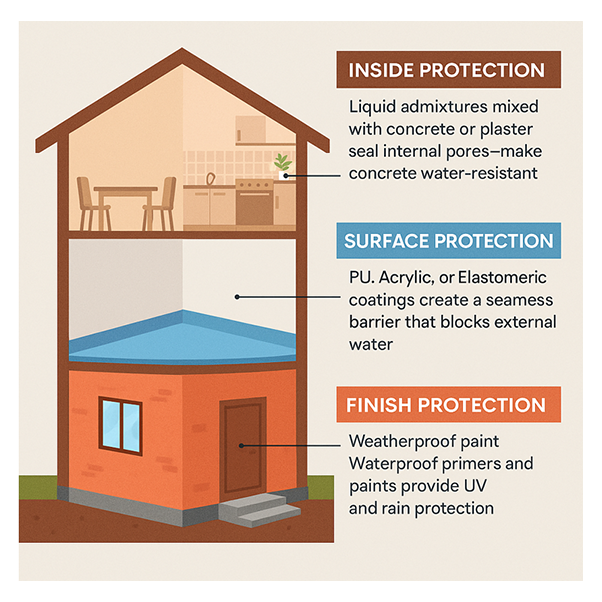
Triple-layer waterproofing was executed using concrete admixtures, protective plaster coats, and Hi-Flex wet-area treatments, supported by curing photographs and test records.
Proactive quality control was exercised, including the replacement of a mason mid-way to maintain workmanship consistency.
Transparency was maintained through agreements, QC reports, and daily WhatsApp photo and video updates.
Extensive flexibility was provided—over 12 design concepts, multiple elevation discussions, and VR walkthroughs—without additional billing.
Throughout the process, communication remained respectful and professional, even under pressure.
In effect, the scope delivered aligned closer to a ₹2,300–₹2,500 per sq.ft standard, while billing remained at the agreed ₹1,800 per sq.ft package.
Root Cause Analysis
Post-project review revealed that the issue was not quality failure, but expectation and governance breakdown.
Early flexibility was misunderstood as unlimited entitlement to rework.
Key contractual clauses existed but were not actively acknowledged.
Documentation was shared consistently but often not reviewed, creating perception gaps.
External advice and emotional reactions overshadowed technical records.
A personal relationship reduced the enforcement of professional boundaries.
The core problem was not construction—it was decision discipline.
Kaizen Learnings for the Future
This experience became a structured Kaizen case study, leading to concrete improvements.
Contracts were strengthened with clearer design-freeze clauses, scope–benefit linkage, mandatory Change Request Notes (CRNs), and payment-linked execution with defined arrear limits.
Transparency moved further into ERP-driven systems, with QC reports, curing photos, and progress logs uploaded to client portals and deemed acknowledged once shared. WhatsApp communication was limited to site visuals, not contractual clarifications.
Client education was enhanced through pre-project orientation sessions and visual summaries clearly explaining what each package includes and excludes.
Client screening protocols were refined to identify high-control or documentation-averse behaviour early, applying risk premiums or declining misaligned projects when required.
Team protection measures were introduced to train site staff to redirect disputes to documented evidence and reduce emotional strain.
Practical Advice for Homeowners
Being involved in your project is important—but involvement works best when paired with structure.
If something on site feels unclear, pause before reacting. Ask for explanations through drawings, records, or documented updates rather than verbal assurances. Decisions made calmly and reviewed properly almost always lead to better outcomes than decisions made under pressure.
Flexibility is valuable, but only when it operates within agreed boundaries.
Good Practice Checklist
Before accepting any change or suggestion during construction, take a moment to reflect:
Is this already covered in the agreement or drawings?
Has the technical team reviewed the impact?
Does it affect cost, time, or long-term performance?
Is this a documented decision or an emotional reaction?
If any answer feels uncertain, clarification is the safest step.
Maintenance Tips
Many issues appear after possession, not during construction. Pay close attention during the first monsoon. Observe drainage speed, plumbing flow, and early signs of seepage.
Keep all drawings, waterproofing records, and QC documentation safely stored. A well-documented home is always easier—and less expensive—to maintain over time.
Key Takeaways
• Construction challenges often stem from expectation gaps, not workmanship
• Early flexibility must not become unlimited entitlement
• Documentation protects both homeowner and contractor
• Technical governance is as important as execution quality
• Clear boundaries preserve relationships and outcomes
FAQ
-
Is flexibility during construction a bad thing?
-
Why do small changes create big issues later?
Because construction systems are interconnected. Minor changes often have hidden downstream effects.
-
Why is documentation so critical?
Because perceptions differ and memories fade. Documentation provides an objective reference for everyone.
-
Is it wrong to question quality on site?
Not at all. The key is to raise concerns through proper channels and review them against agreed standards.
-
How can homeowners reduce conflict during construction?
By maintaining clarity on scope, respecting process discipline, and addressing concerns early and calmly.
Final Thought
This project was never about poor construction.
It was about how easily expectations can drift when boundaries soften and processes are ignored.
A successful home is not built only through materials and labour. It is built through clarity, alignment, and mutual respect.
When expectations are clear and systems are trusted, even challenges become opportunities for improvement. That is the true spirit of Kaizen—and the foundation of lasting quality.
Author
Trilok G. Mylar
Founder & Proprietor – Srusti Constructions (Mylar Enterprises)
M.Tech | MBA | Construction & Interiors Professional
Credentials & Recognition
- Leads an ISO-aligned organisation (ISO 9001 • ISO 14001 • ISO 45001 principles)
- Featured in Homes India Magazine
- Recognised by leading industry publications, including Silicon India
Purpose of This Blog
This article is part of Srusti Constructions’ Homeowner Education Initiative, created to enable informed, process-driven, and quality-focused construction decisions.
Call to Action
Planning a project or seeking clarity before proceeding?
Connect with Srusti Constructions for a structured consultation on design, construction, interiors, or project management.
Talk to Our Experts
For Best Quality Construction At Affordable Rates
Recent Posts
Energy-Efficient Homes: Save Money Long-Term
Posted on March 24, 2026 by Energy-Efficient Homes: Save Money Long-Term

Top Builders in North Bangalore for Independent
Posted on March 24, 2026 by Top Builders in North Bangalore for Independent

Red Flags in Construction Decision-Making
Posted on Dec 12, 2025 by Author: Trilok G Mylar
Building Beyond Challenges: How Homeowners Can Ensure a Smooth Construction Journey
Posted on Nov 12, 2025 by Trilok G Mylar

How to Choose the Right Construction Package for Your Dream Home (2025 Edition)
Posted on Sep 12, 2025 by Trilok G Mylar

Smart Home Construction: Essential Do’s and Don’ts Every Homeowner Should Know
Posted on Aug 12, 2025 by Trilok G Mylar
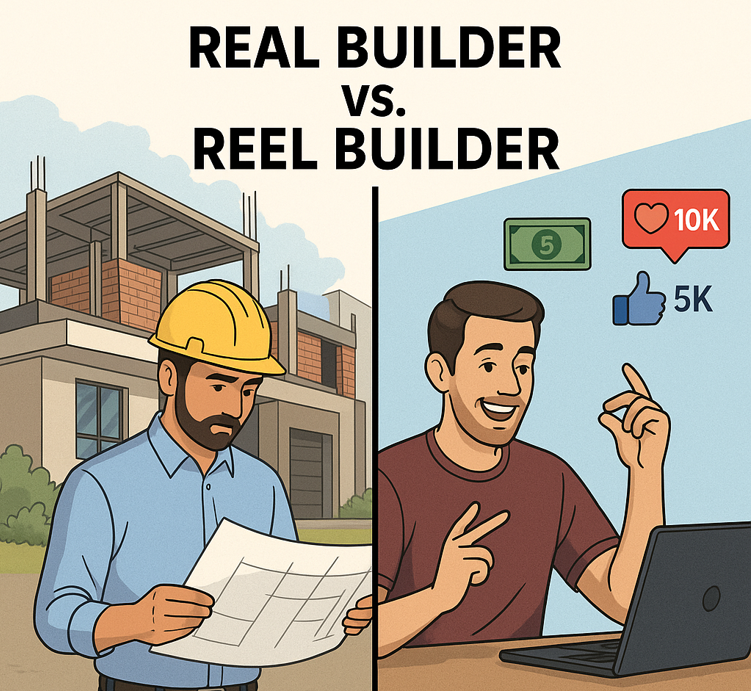
The Truth Behind Construction Reels: When Views Replace Values
Posted on Jul 12, 2025 by Trilok G Mylar
Building Beyond Challenges: A Kaizen Learning in Residential Construction
Posted on Jun 12, 2025 by Trilok G Mylar
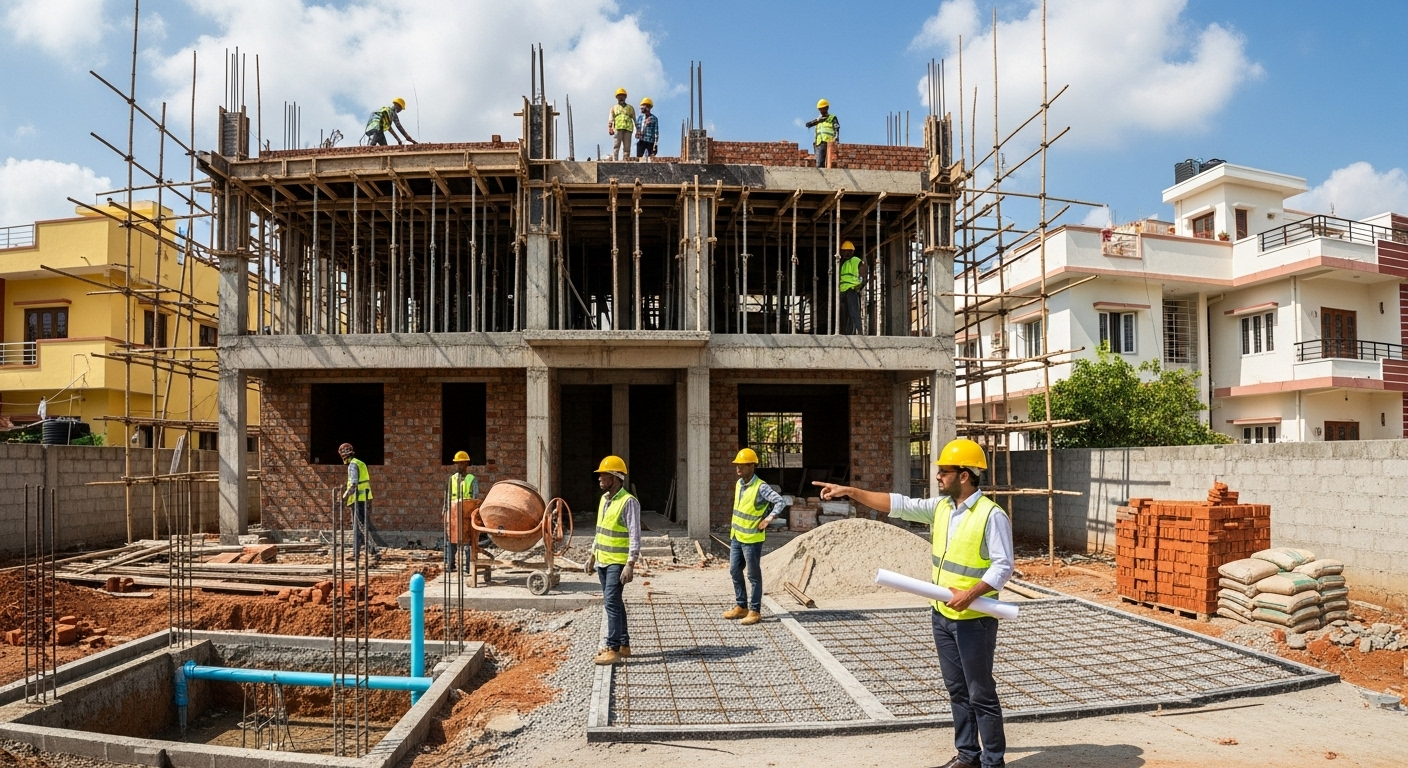
The Complete House Construction Guide for 30×40 & 40×60 Sites in Bangalore (2025 Edition)
Posted on May 12, 2025 by Trilok G Mylar

The Smart Choice: Cutting Through the Myths of Consultant-Led and Direct Labour Contracts
Posted on Apr 12, 2025 by Trilok G Mylar
TOP