


- Author By : Trilok G Mylar
- Date :
Plumbing Work in House Construction: A Complete Guide to Planning and Installation
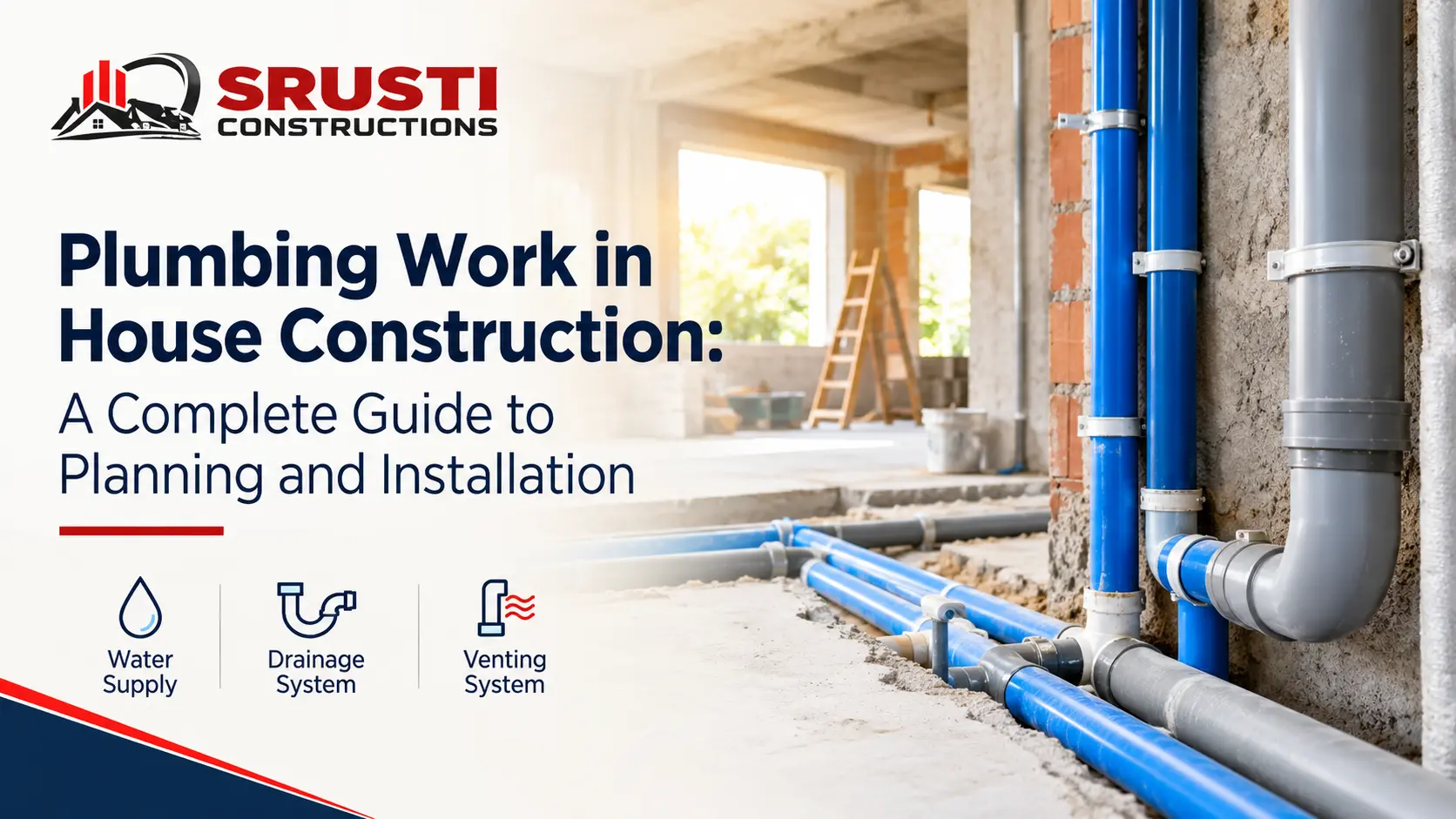
Plumbing Work in House Construction: A Complete Guide to Planning and Installation
Plumbing Work in House Construction involves installing pipes, valves, fittings, and fixtures that supply clean water and remove wastewater from a home. A properly designed plumbing system includes three essential components: the water supply network, the drainage system, and the venting system. Planning these components before plastering and flooring helps prevent water leakage, blocked drains, unpleasant odours, and expensive repairs.
What Is Meant by Plumbing Work?
Plumbing work includes installing and connecting the pipes, valves, sanitary fittings, and drainage connections required to manage water movement throughout a building.
In a new home, the water supply network delivers water from a municipal connection, borewell, or storage tank to bathrooms, kitchens, and utility areas. The drainage network carries wastewater away from the building to the appropriate disposal connection.
Both systems must work together to maintain hygiene, convenience, and water efficiency. Coordinating plumbing with civil and electrical work during construction also reduces the risk of unnecessary modifications after the walls and floors are completed.
Importance of Plumbing in House Construction
A reliable plumbing system of a home supports everyday activities such as cooking, bathing, washing clothes, and cleaning. Proper installation also helps protect the building from moisture-related problems.
The key benefits of good plumbing include:
Clean Water Supply
A well-designed water supply network delivers water to taps, showers, washbasins, and kitchen sinks. Suitable plumbing pipes, secure joints, and accessible valves help maintain consistent water flow and reduce leakage risks.
Efficient Wastewater Disposal
An effective drainage system carries wastewater away from bathrooms, kitchens, toilets, and utility areas. Correct pipe sizing, suitable drainage slopes, and properly installed traps help prevent blockages and unpleasant smells.
Comfort and Convenience
Thoughtful bathroom plumbing and kitchen plumbing ensure that water connections are available wherever required. Planning the positions of showers, sinks, washing machines, and water heaters before construction makes the home more practical.
What Is Construction Plumbing?
Construction plumbing refers to plumbing installation carried out while a building is being constructed. It includes preparing the plumbing layout, installing supply and drainage pipes, connecting valves, and providing necessary venting arrangements.
The process generally involves three stages:
- Rough-in installation: Pipes are routed through designated walls, floors, slabs, and service shafts before finishing work begins.
- Inspection and testing: Pipe joints and supply lines are checked for leaks before concealed pipes are covered.
- Fixture installation: Taps, toilets, washbasins, kitchen sinks, and showers are connected after the relevant finishing work.
Planning Plumbing Work in House Construction before the finishing stage makes it easier to coordinate pipe routes with the structural layout and electrical installations. It also reduces the likelihood of damaging completed surfaces during repairs or modifications.
Understanding the Plumbing System of a Home
A complete plumbing system generally consists of three interconnected components: the supply line network, the drainage system, and the venting system.
1. Supply Line Network
The supply line network carries water from the main connection, borewell, storage tank, or pumping system to the required fixtures.
Important considerations include:
- Pipe selection: Choose materials according to their intended application, pressure, temperature, and durability.
- Water pressure: Ensure adequate water flow to bathrooms, kitchens, and upper floors.
- Water valves: Install accessible isolation valves to shut off individual sections during maintenance.
- Ball valves and gate valves: Select suitable valves according to the system design and intended use.
- Check valves: Use these where necessary to help prevent reverse water flow.
Accessible isolation valves make repairs easier without requiring the entire house water supply to be shut off.
2. Drainage System
The drainage system removes wastewater and sewage from toilets, showers, washbasins, and kitchen sinks. Pipes must have appropriate diameters, correctly aligned joints, and suitable slopes to support gravity-driven flow. Incorrect slopes and poorly installed connections can cause frequent blockages.
Traps beneath fixtures retain a water seal that helps prevent sewer gases from entering living spaces. Inspection points should also be provided where necessary to make cleaning and maintenance easier.
Rainwater drainage requires separate consideration. Roof gutters, downpipes, and suitable stormwater arrangements help direct rainwater away from the building and reduce water accumulation around the foundation.
3. Venting System
The venting system allows air to move through the drainage network and helps maintain suitable pressure within the pipes. Without adequate venting, water movement can disturb trap seals, resulting in gurgling sounds, slow drainage, and unpleasant odours.
Vent pipes should be positioned according to the plumbing design and applicable building requirements.
Important Plumbing Considerations During House Construction
Before installation begins, homeowners should discuss the following points with their construction team.
- Plan the layout early: Finalise bathroom, kitchen, utility-area, and water-tank locations during the design stage.
- Choose suitable materials: Select pipes, fittings, and valves according to their intended use, water quality, pressure requirements, and applicable standards.
- Test concealed pipes: Complete appropriate leak or pressure tests before covering pipes with plaster, tiles, or concrete.
- Coordinate construction activities: Plumbing routes must be planned alongside structural and electrical work. Avoid unauthorised cutting or drilling of structural members.
- Provide maintenance access: Keep important valves, inspection points, and service connections accessible to simplify future repairs.
These precautions help improve reliability and reduce avoidable maintenance expenses.
Maintenance of Plumbing
Regular maintenance helps identify minor problems before they become expensive repairs. Homeowners should follow these practices:
- Check taps, exposed pipes, and visible joints for leaks.
- Clean kitchen strainers and floor traps regularly.
- Avoid flushing wipes or pouring cooking oil into sinks.
- Arrange periodic cleaning and inspection of water storage tanks.
- Keep drainage outlets and rainwater pipes free from debris.
- Investigate damp patches and unexplained increases in water consumption.
If a concealed leak is suspected, arrange a professional inspection before breaking walls or floors. Identifying the source first can reduce unnecessary repair work.
Plumbing Work in House Construction requires careful planning, suitable materials, professional installation, and regular maintenance. A properly designed supply network, efficient drainage system, and correctly installed venting system help maintain hygiene, comfort, and long-term functionality.
By planning the layout early, testing concealed pipes, and coordinating plumbing with other construction activities, homeowners can reduce avoidable problems and protect their investment.
Why Choose Srusti Constructions?
At Srusti Constructions, we understand that building a quality home involves more than attractive design and strong structural work. Essential services such as plumbing must also be planned carefully to support everyday comfort and long-term functionality. Our approach focuses on construction planning, coordination between work stages, attention to installation details, and clear communication throughout the project.
Planning your dream home in Bangalore? Contact Srusti Constructions to discuss your house construction requirements and take the first step towards a well-planned home.
Frequently Asked Questions
1. When should plumbing work begin during house construction?
Planning should begin during the design stage. Installation is coordinated with structural work and completed before the relevant walls and floors are finished.
2. Which pipes are suitable for house plumbing?
CPVC and PPR are commonly used for suitable water supply applications, while uPVC is widely used for drainage. The final selection depends on the application and applicable standards.
3. What is concealed plumbing?
Concealed plumbing involves installing pipes inside walls, floors, or designated service spaces. Proper inspection and testing before covering them are essential.
4. Why is a venting system necessary?
A venting system helps maintain pressure in drainage pipes and protects the water seals in traps, reducing the risk of sewer gases entering the home.
5. How can homeowners prevent plumbing problems?
Regular inspections, timely leak repairs, clear drainage outlets, suitable materials, and professional maintenance help prevent common plumbing issues.
Planning Your Home construction with Srusti Constructions
Looking for reliable house construction in Bangalore?
If you are planning to build your dream home, choosing an experienced construction company is important for ensuring that essential systems, including plumbing, are properly planned and installed. Before finalising a builder, discuss the following:
- Plumbing layout and installation planning
- Water supply, drainage, and venting arrangements
- Pipe materials, fittings, and finishing specifications
- Concealed pipe testing and leak prevention
- Construction timelines and written agreements
- Project progress updates and previous construction projects
As a homeowner, understanding house construction Bangalore requirements, including plumbing, structural planning, and material selection, helps you make informed decisions and avoid unnecessary expenses. The overall cost of house construction depends on plot size, the number of floors, design complexity, material quality, and finishing requirements.
Request a detailed written estimate that clearly explains the scope of work, specifications, and payment stages before proceeding.
Ready to Build Your Dream Home in Bangalore? Looking for a reliable construction partner or a Karnataka leading construction company for your residential project? Get in touch with Srusti Constructions to discuss your home construction requirements, plumbing arrangements, design preferences, and budget.
Explore our house construction packages and visit the Srusti Constructions YouTube Channel to learn more about our work. Plan your plumbing carefully. Choose materials wisely. Build your home confidently with Srusti Constructions.
